
Episode 1 · Origins, Part 1 · 1896
Before Ford Motor Company, there was a 32-year-old engineer, four friends from work and a car built in a backyard shed. It was so homemade it didn’t fit through the door.
Quick facts
- First drive: early morning, June 4, 1896, Detroit
- Built in: a brick shed behind 58 Bagley Avenue
- Engine: 2 cylinders, 59 cubic inches, about 4 hp (estimated)
- Speeds: about 10 or 20 mph. Neutral, no reverse
- Weight: about 500 lb
- Horn: a doorbell
- Sold: late 1896 for $200. Bought back in 1904 for $65
The story
In 1896 Henry Ford was chief engineer at the Edison Illuminating Company in Detroit. In his spare time he worked on a gasoline engine, starting from a Kane-Pennington design printed in the January 9, 1896 issue of American Machinist. The plans were incomplete, so he worked out his own ignition.
Four Edison co-workers helped: David Bell, Jim Bishop, George Cato and Edward “Spider” Huff. The result had an angle-iron frame, a buggy seat, bicycle-style wheels, belts and a chain to the back wheels, two speeds and no reverse. The horn was a doorbell.
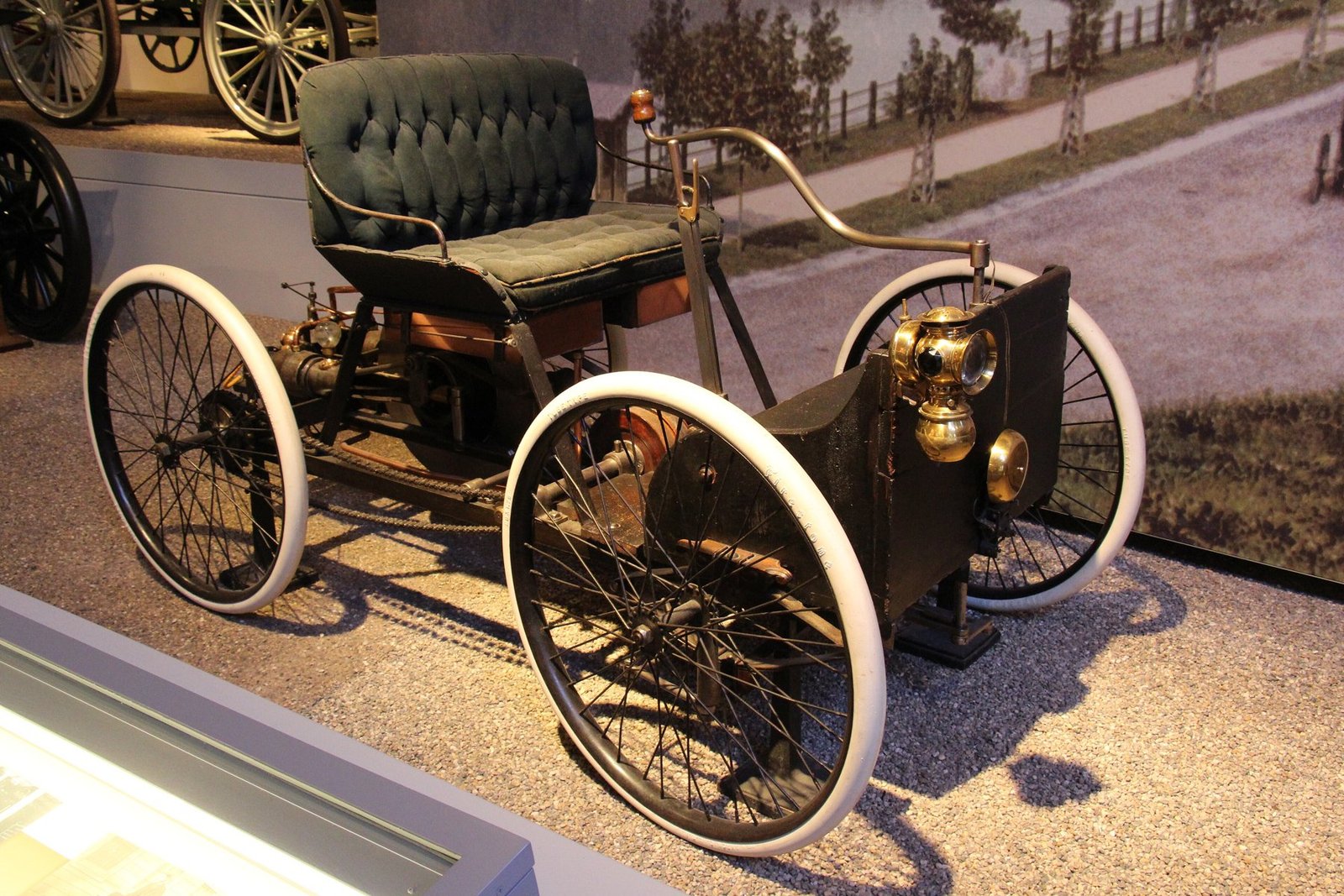
When it was finished, the car was wider than the shed door, so Ford knocked out the door frame and some bricks with an axe. In the early morning of June 4, 1896, with Jim Bishop riding a bicycle ahead to warn traffic, Ford drove it through Detroit. A spring in the ignition broke on the way. They fixed it, went home, slept a few hours and went to work.
Myth check: was Ford first in Detroit?
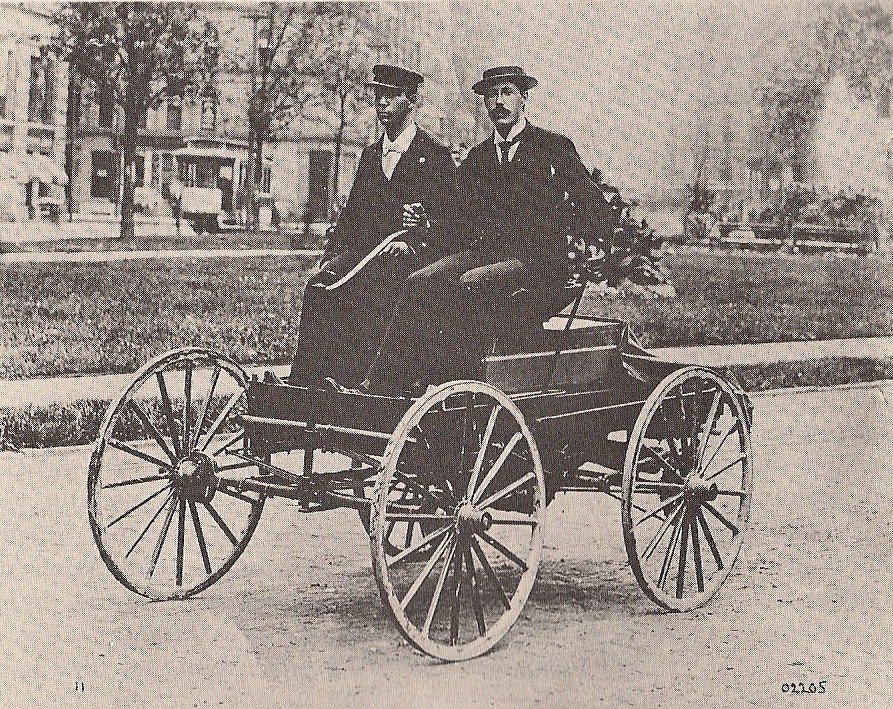
No. In his 1922 memoir Ford called his buggy “the first and for a long time the only automobile in Detroit.” But Charles Brady King drove a gasoline car down Woodward Avenue on March 6, 1896, three months earlier, and King helped Ford build the Quadricycle. The Henry Ford calls the Quadricycle “only the second automobile driven in the Motor City.” Ford’s memoir also dates his first car to 1892–93, but historians date the first drive to June 1896.
Why it matters today
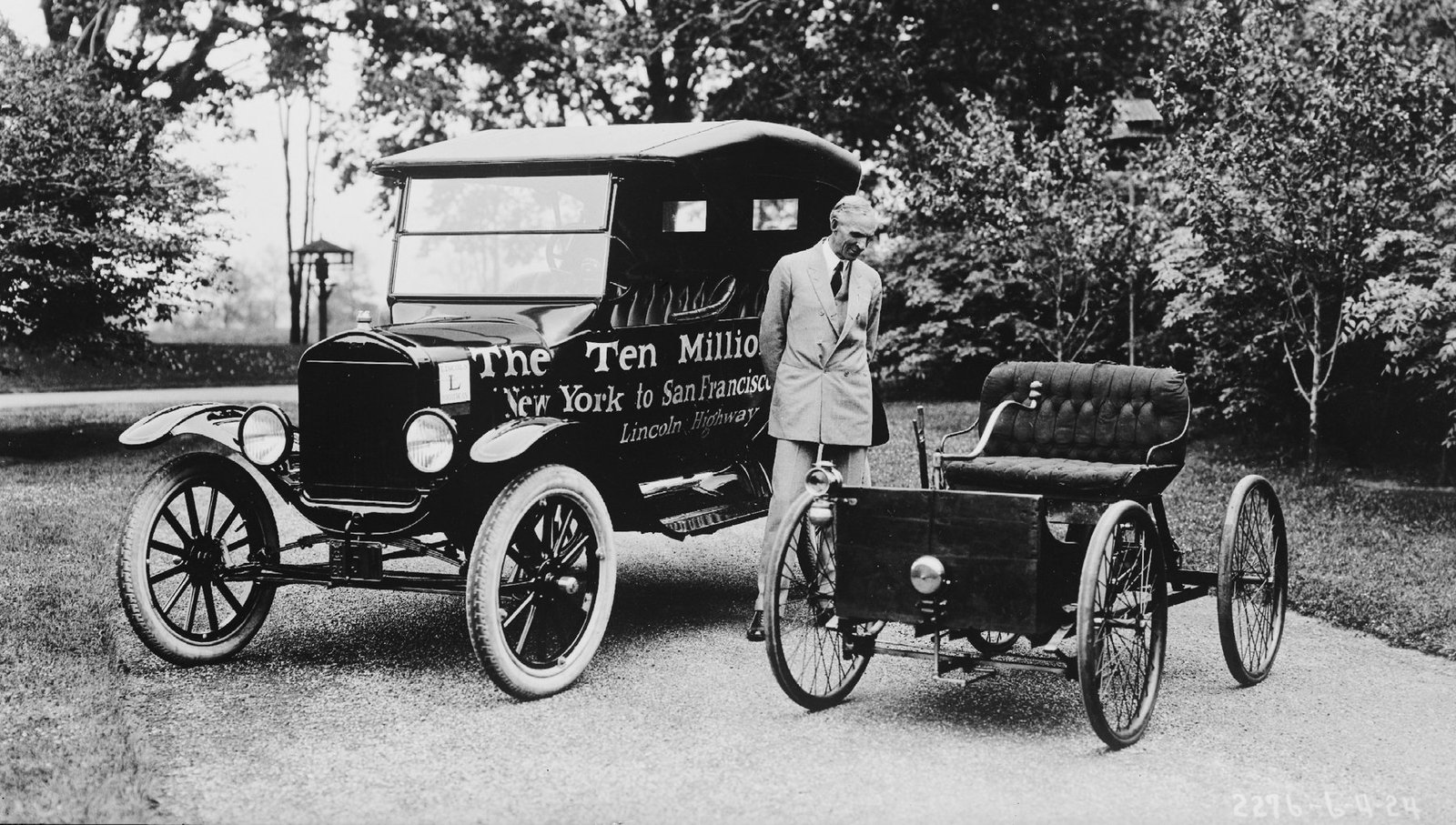
Ford sold the Quadricycle in late 1896 for $200 to fund his next car, and left Edison in 1899 to start building cars full time. A photo of it later became evidence in the Selden patent fight, which Ford won on appeal in 1911. In 1904 he bought it back for $65, and on June 4, 1924, he posed between it and the ten-millionth Ford. It’s now in the Driving America exhibit at the Henry Ford Museum in Dearborn.
Sources
- The Henry Ford, 1896 Ford Quadricycle Runabout
- Ford Motor Company, Henry Ford’s Greatest Innovation: The Quadricycle
- The Henry Ford, Engines Exposed: 1896 Ford Quadricycle
- The Henry Ford, Employees at Edison Illuminating Company of Detroit
- The Henry Ford, Henry Ford with the Quadricycle, October 1896 (Selden patent evidence)
- The Henry Ford, Henry Ford and Henry Ford II with the Quadricycle, May 1946
- Detroit Historical Society, Charles Brady King
- Henry Ford with Samuel Crowther, My Life and Work (1922)
- PBS American Experience, Henry Ford timeline
- Library of Congress, First and ten millionth Ford (1924)
Image credits
- Henry Ford in the Quadricycle: Spooner & Wells, public domain, via Wikimedia Commons
- The Quadricycle at the Henry Ford Museum: Sicnag, CC BY 2.0, via Wikimedia Commons
- Charles Brady King’s car, 1896: public domain, via Wikimedia Commons
- First and ten millionth Ford, 1924: Detroit Publishing Co., Library of Congress, no known restrictions
- Henry and Clara Ford in the Quadricycle: from The Truth About Henry Ford (1922), public domain, via Wikimedia Commons
- Woodward Avenue, Detroit, around 1895: Robert N. Dennis collection, New York Public Library, public domain, via Wikimedia Commons
- The Quadricycle on display: DougW, public domain, via Wikimedia Commons
- Detroit, 1891: Guide and Souvenir of Detroit (1891), Internet Archive Book Images, no known restrictions, via Wikimedia Commons
- Replica of the Bagley Avenue workshop, Greenfield Village: w_lemay, CC BY-SA 2.0, via Wikimedia Commons
- The Kane-Pennington motor: The Autocar (1896), public domain, via Wikimedia Commons
- Woodward Avenue in winter, 1900s: Detroit Publishing Co., Library of Congress, public domain, via Wikimedia Commons
- Woodward Avenue postcard: Teich postcard collection, Newberry Library, public domain, via Wikimedia Commons
- Henry Ford, about 1919: Hartsook, Library of Congress, public domain, via Wikimedia Commons
- Hotel Pontchartrain and Woodward Avenue postcard: Teich postcard collection, Newberry Library, public domain, via Wikimedia Commons
- George Selden’s patent drawing, US Patent 549,160 (1895), public domain, via Wikimedia Commons


The 40-second version
Watch next
Origins, Part 2: Two failed companies, and how one became Cadillac. Coming next week.